General Education
Best Egg Donor Programs Focusing on Diversity: Why Representation Still Falls Short Nationally — and What Shared Beginnings Is Doing Differently
Why diverse egg donor pools matter — and what Shared Beginnings is doing differently.
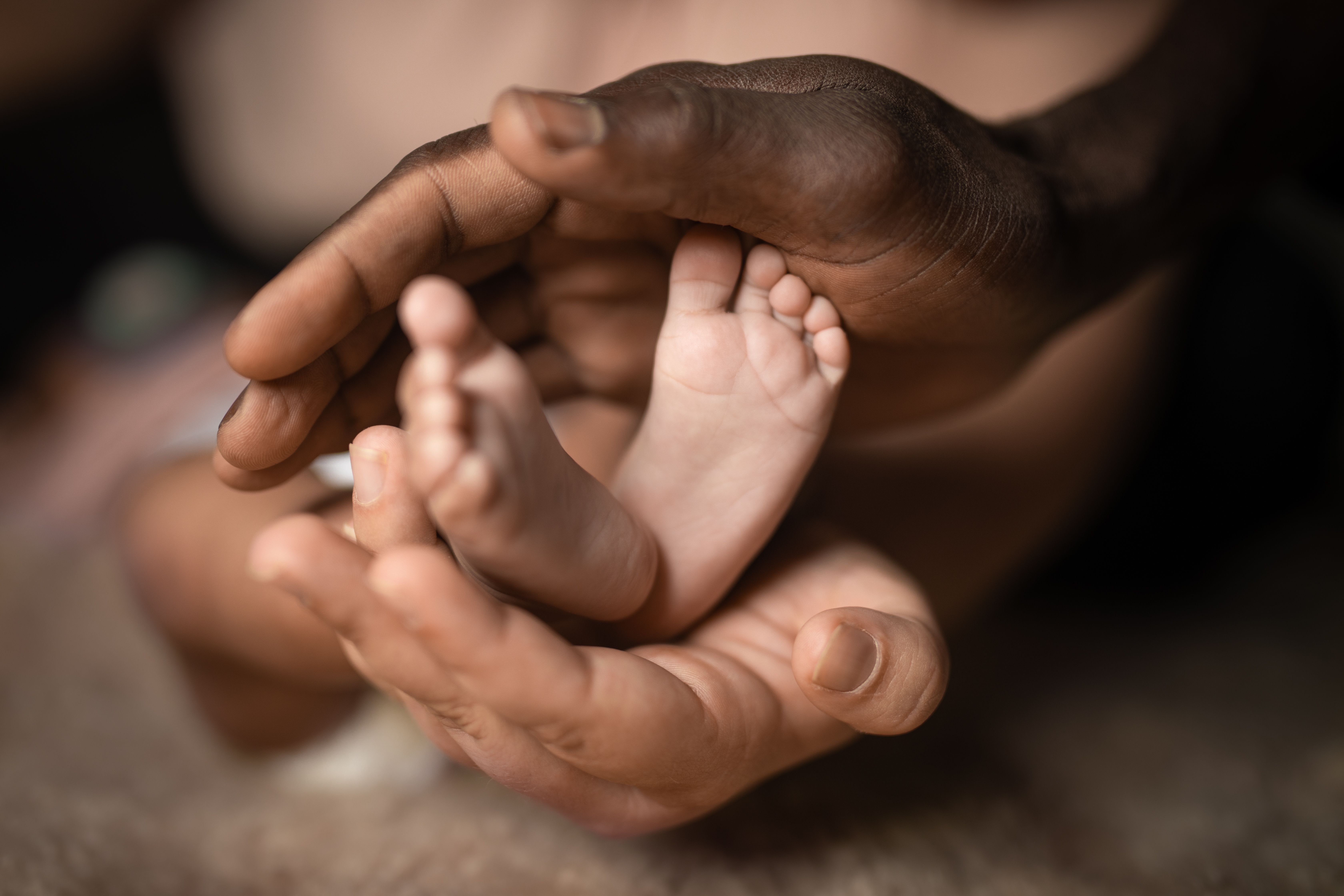
For many hopeful parents, the search for an egg or embryo donor is already one of the most tender and complex experiences of their lives. For families from Black, Asian, Hispanic, Jewish, or mixed-heritage backgrounds, that search often carries an added weight: a genuine shortage of donors who reflect who they are.
It's something we hear often, and it matters deeply to us. Across the United States, most egg donor programs have struggled to build donor pools that truly represent the families seeking care. At Shared Beginnings, a medically-led agency, we've built our program around the belief that every family deserves to feel seen.
A National Problem Backed by Peer-Reviewed Research
The most comprehensive data on donor diversity comes from a 2022 peer-reviewed cross-sectional study published in Fertility and Sterility that analyzed 1,574 donor profiles across 12 U.S. egg banks. The findings are worth understanding, especially if you've already felt the gap yourself.
Black egg donors made up just 8.9% of donor pools nationally — meaningfully below their representation among U.S. women of donor-eligible age (14%) and below their share of donor egg IVF recipients (10.8%). Families seeking a Black egg donor or African American egg donor are, in many cases, the ones with the fewest options.
The picture for Asian egg donors tells a similar story. Asian donors represented 7.7% of profiles nationally, yet Asian-identifying families made up 10.6% of those seeking donor eggs. Demand exceeds what most programs can offer. And when the one bank in the study that specifically focused on Asian donor sourcing was removed from the analysis, that figure dropped to just 2.8%. For most U.S. egg banks, Asian egg donors are nearly absent from the pool entirely.
Hispanic egg donors were more represented in absolute terms — 24.1% of national donor profiles — but the quality of screening, the depth of available options, and the level of personalized support vary considerably from program to program.
Jewish egg donors and donors from other specific ethnic or cultural backgrounds are seldom reflected in national data at all, pointing to a broader gap that extends well beyond the populations most commonly discussed.
The study's conclusion was clear: the racial and ethnic makeup of donor pools differs significantly from both the general population of eligible women and from the families who are actively seeking donor eggs.
Why Most Egg Donor Programs Fall Short
The gap isn't a reflection of any community's generosity or desire to help. The same 2022 Fertility and Sterility study found that 80.5% of donor profiles across 12 U.S. egg banks listed "helping others" as a motivation for donating. The willingness is there.
The reasons for underrepresentation are more structural, rooted in how fertility medicine has historically been built and who it was designed to serve. Cultural conversations around reproductive care vary across communities. And for Black women in particular, well-documented experiences of mistreatment within medical settings have created real, understandable reasons for caution. These are not small things. They reflect a system that has been slow to evolve.
The pattern extends beyond egg donation as well. A 2023 study presented at the American Society for Reproductive Medicine's annual meeting found comparable gaps in sperm donation, with Hispanic and Black donors significantly underrepresented relative to U.S. population benchmarks. Longitudinal data showed little change over a five-year period from 2018 to 2022. This is an industry-wide challenge, not an isolated one.
What This Means If You're Searching for a Diverse Egg Donor
Whether you're looking for an African American egg donor, an Asian egg donor, a Hispanic egg donor, a Jewish egg donor, or a Caucasian egg donor, the national landscape shapes what's realistically available to you and how long your search might take.
For families hoping to find a donor who reflects their heritage, the data above often translates to fewer profiles, longer timelines, and the quiet, difficult feeling of not quite belonging in spaces that weren't designed with you in mind. If that has been your experience, we want you to know: it's not you. And it doesn't have to stay that way.
Finding one of the best egg donor programs focusing on diversity isn't only about physical resemblance. It's about finding a program with the clinical depth, the screening standards, and the genuine care to support your family through every step of the journey.
Shared Beginnings: A Reputable Egg Donor Agency With a Truly Diverse Pool of Candidates
Founded in 2019 by a team of medical professionals in Raleigh, North Carolina's Research Triangle, Shared Beginnings was created as a medically-led alternative to traditional egg bank models. We offer a genuinely diverse donor pool, including African American, Black, Asian, Hispanic, Caucasian, Jewish, and mixed-heritage donors — alongside the rigorous clinical standards that make a meaningful difference in outcomes.
That commitment extends to the clinical partners who work alongside us. Atlantic Fertility, Shared Beginnings' affiliate fertility clinic, has earned FertilityEquity™ certification from Morehouse School of Medicine and Ferring Pharmaceuticals, a distinction awarded to practices that demonstrate equitable, compassionate fertility care for patients of all backgrounds. Shared Beginnings Program Director Stephanie Bartlett, MSN, WHNP-BC, has also received individual FertilityEquity™ certification. The FertilityEquity™ e-Learning modules were developed specifically to address documented disparities in fertility care, including research showing that compared to white women, Black women are attempting to conceive for up to 1.5 years longer, up to six times more likely to have difficulty finding a physician they feel comfortable with, and more than seven times more likely to have difficulty getting an appointment. For families from underrepresented backgrounds, this certification is more than a credential. It reflects the kind of care environment where every patient can expect to be seen, heard, and treated with the same standard of expertise.
The difference from national averages is significant. At the time of publication:
Approximately 80% of available Shared Beginnings egg donors are Black, Hispanic, or of mixed ancestry — compared to 8.9% Black and 24.1% Hispanic nationally in peer-reviewed benchmarks.
Over 85% of available Shared Beginnings embryos were created from donors of Black, Asian, Hispanic, or mixed ancestry.
Inventory always fluctuates, but these figures reflect what it looks like when a program is built from the ground up with all families in mind.
What Makes Shared Beginnings Different
Medically-led from start to finish. Shared Beginnings is run by board-certified medical providers, not an administrative team. Every donor undergoes comprehensive screening: detailed medical and reproductive history review, psychological evaluation, genetic carrier screening, infectious disease testing, ovarian reserve assessment, and ongoing clinical oversight.
Four pathways, all backed by guarantees. Families can choose from Fresh Egg Donor, Frozen Egg Donor, Donor Embryo Selection, or Donor Embryo Creation — each one designed for a different set of circumstances and goals, and all backed by outcome assurances that most programs simply don't offer.
Pregnancy rates that exceed national averages. Our fresh donor egg programs have achieved a 77% pregnancy rate with donor sperm and 74% with partner sperm — outcomes grounded in quality-controlled, single-clinic consistency.
Global delivery, local care. You don't need to travel to access our programs. After embryo creation, embryos are cryopreserved and shipped to your local fertility clinic for transfer. You stay close to home and close to the care team you trust.
One-on-one guidance throughout. Each intended parent works directly with a nurse practitioner, from donor selection through embryo creation, with clear, transparent communication at every stage. You're never left wondering what comes next.
Finding the Right Donor for Your Family
Whether you're specifically searching for a Black egg donor, an African American egg donor, an Asian egg donor, a Hispanic egg donor, a Jewish egg donor, or a Caucasian egg donor, the first step is finding a reputable egg donor agency with a diverse pool of candidates — one with the clinical depth and personalized support to guide you through what is, for most families, one of the most significant decisions of their lives.
We know how much is riding on this. And we're here to help you navigate it with honesty, expertise, and care.
Every Family Deserves to Find Their Path
The diversity gap in donor egg and embryo programs isn't inevitable. It's a reflection of who these programs were originally built to serve. For many families from Black, Asian, Hispanic, Jewish, and mixed-heritage backgrounds, the experience of searching has felt like navigating a system that wasn't quite made for them.
That's something we think about deeply at Shared Beginnings.
We built this program to offer a medically rigorous, deeply personal experience with a breadth of donor options that reflects the true range of families we have the privilege of serving. Every program is backed by a guarantee. Every donor is fully screened. And every family receives the attentive, one-on-one support this journey deserves.
When you're ready to take the next step, we're here.
We'd love to answer your questions. Reach out to schedule a personal consultation with our team — we'll walk you through your options, help you understand what's available, and make sure you have everything you need to move forward with confidence.
📞 (919) 248-1640
✉️ connect@sharedbeginnings.life
Explore our diverse donor pools.
Sources
Tsai, S., et al. "Racial and ethnic disparities among donor oocyte banks in the United States." Fertility and Sterility, 2022. PMC9249380
Gibbs, L., et al. "Lack of Racial, Ethnic Diversity in Cryopreserved Donor Sperm in the United States." Presented at ASRM Annual Meeting, 2023.
Liu, J.H., et al. "Selection Rate of Oocyte Donors Based on Race and Ethnicity." Fertility and Sterility, 2022.
Missmer S, Seifer D, Jain T. "Cultural factors contributing to health care disparities among patients with infertility in Midwestern United States." Fertility and Sterility. 2011;95(6):1943–1949. doi:10.1016/j.fertnstert.2011.02.039

